
Case study09 · Arçelik
Unbanked Paymentsa digital promissory note for people banks leave out
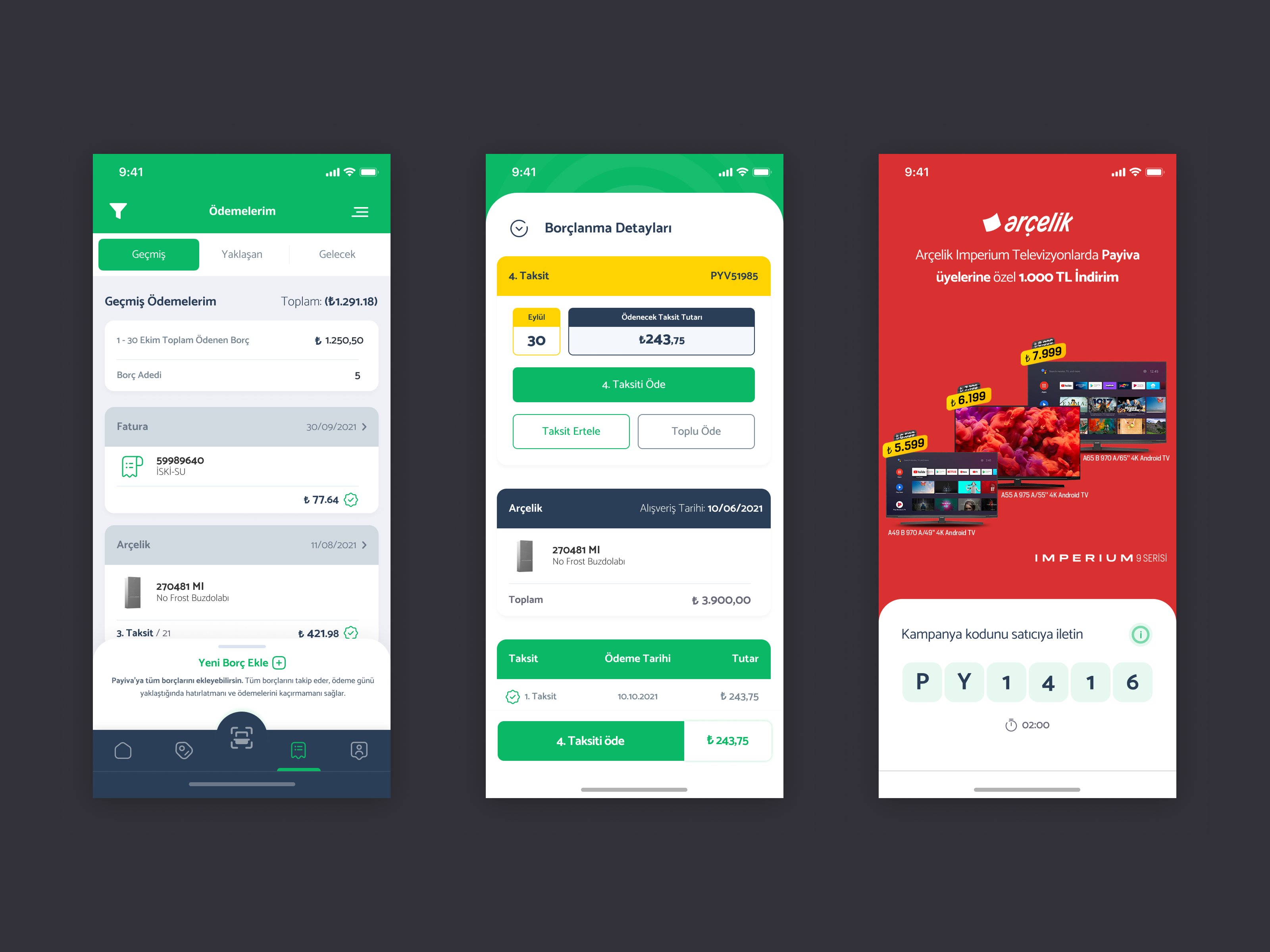
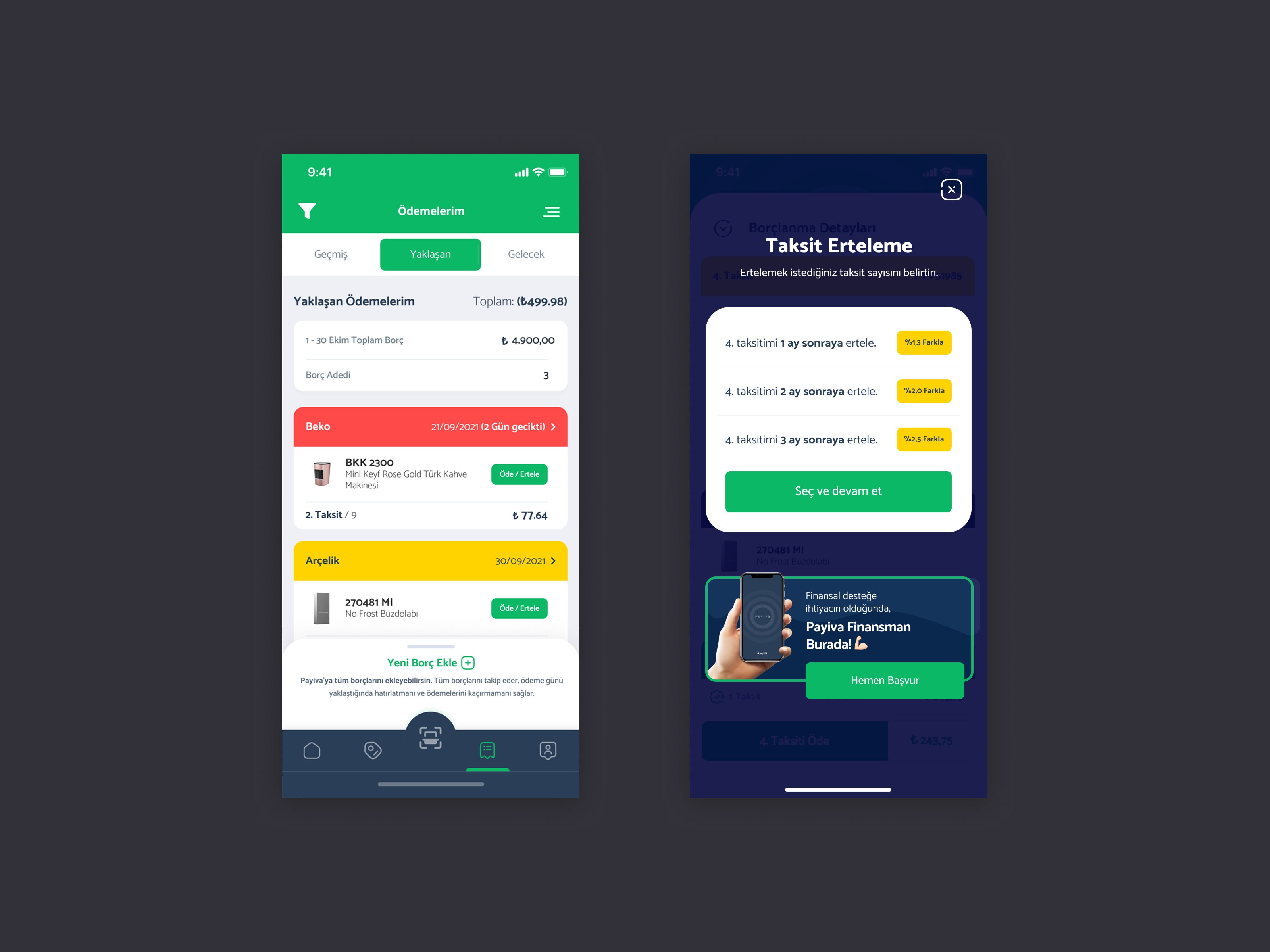
Payiva, built with Arçelik's innovation team, set out to make buying on promissory notes, the way many people without a bank account or enough credit buy home appliances in Turkey, more reliable, easier and more humane for both the customer and the dealer.
01
Context
Arçelik's innovation team asked one question: how might we make the way people who can't use the banking system borrow and pay back more reliable, easier and more humane?
In Turkey, many households buy fridges, washing machines and furniture on a senet, a handwritten promissory note agreed directly with the dealer and built on trust. Its customers are the unbanked, with no bank account in the household, and the underbanked, who have a card but whose limit is too low to use. Arçelik's team started the discovery phase, and Dogma Alares joined along the way: we built on the research, developed the concept and tested it with dealers. I led the UX work on our side.
02
The problem
A dealer“If you don't call, if you don't chase them, they don't come to pay. You have to keep following up by phone.”
03
Key decisions
Build on what discovery already knew
We joined discovery after Arçelik's team had started it, so rather than repeat the research we built on it: 13 in-depth interviews and 2,893 post-its distilled into 67 insights. We then interviewed dealers whose annual sales are at least 30% on notes, including on-site observation in two stores, to understand how they verify customers and collect payments.

Segment by mindset, not demographics
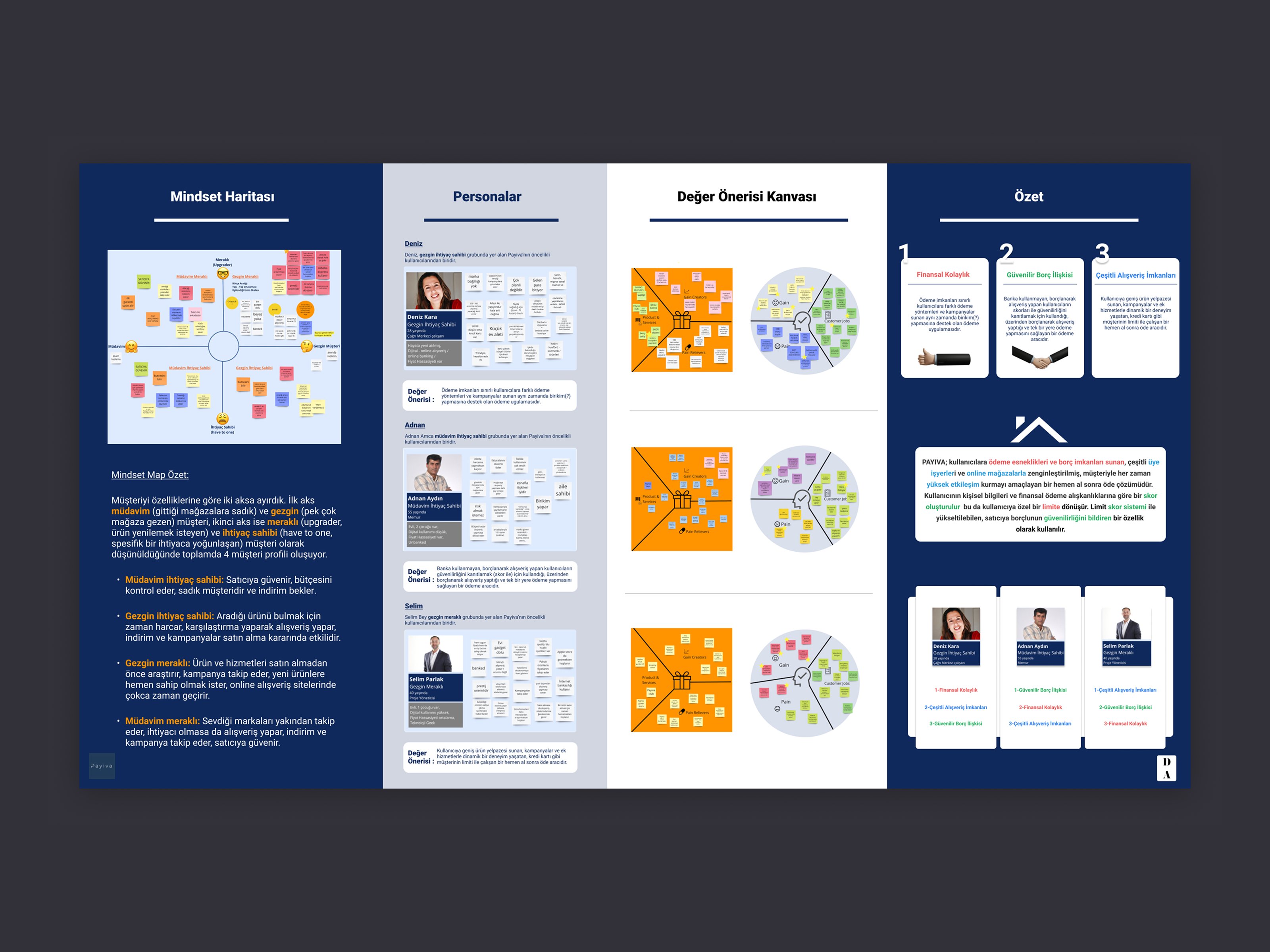
A mindset map split customers on two axes: loyal to one store or shopping around, and buying out of need or out of curiosity. Personas like Adnan, a loyal, need-driven civil servant without a bank account, and Deniz, a call-centre worker who compares stores before buying, led to three promises: financial ease, a trustworthy debt relationship and more ways to shop.
Design the ideal journey for both sides
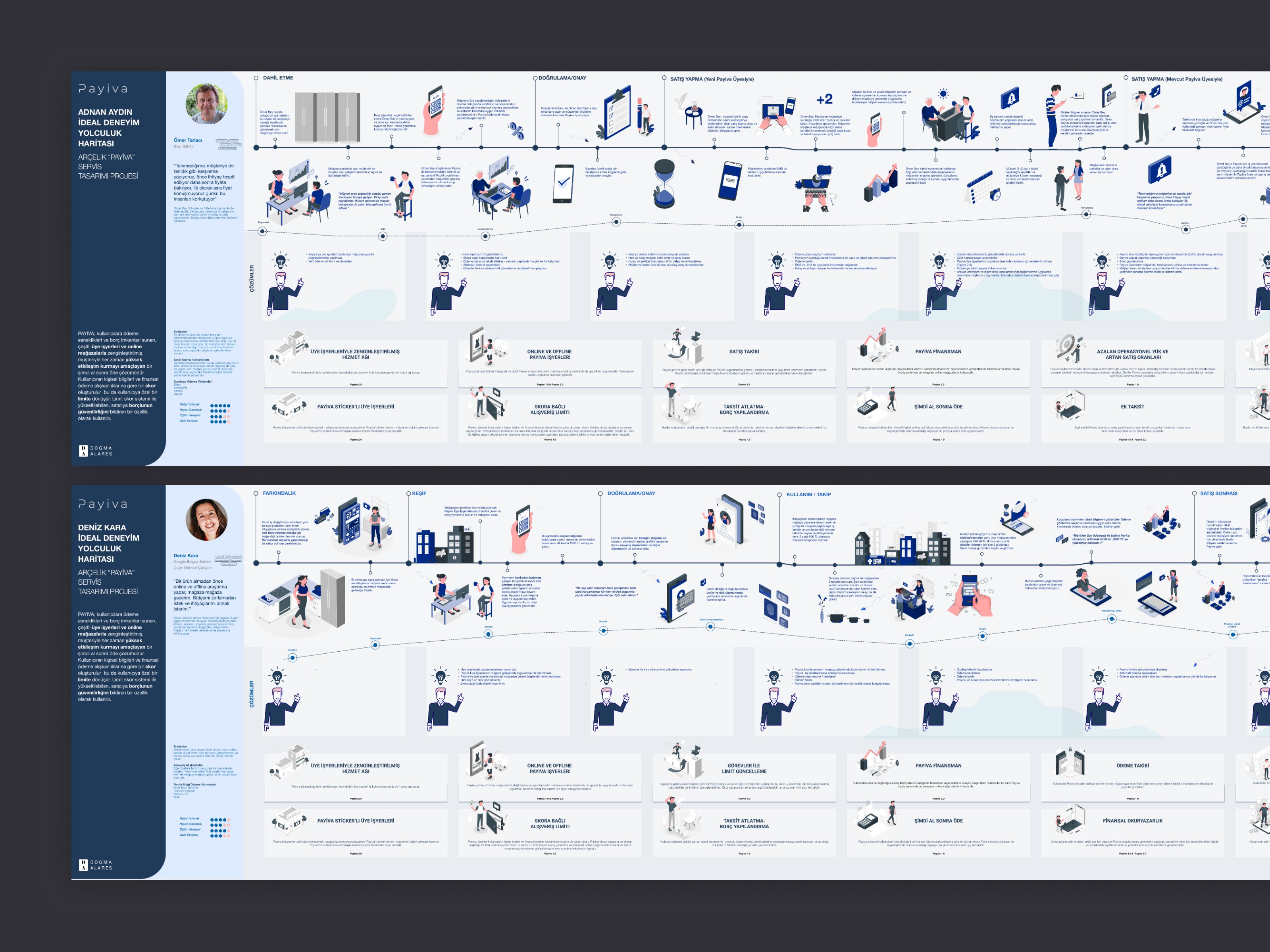
For each persona we mapped an ideal journey, from awareness and sign-up through verification, purchase and after-sales. Under every step sit the dealer's actions and the Payiva solution that supports them, each tagged to the release that would deliver it.
Map the dealer's flow before the screens
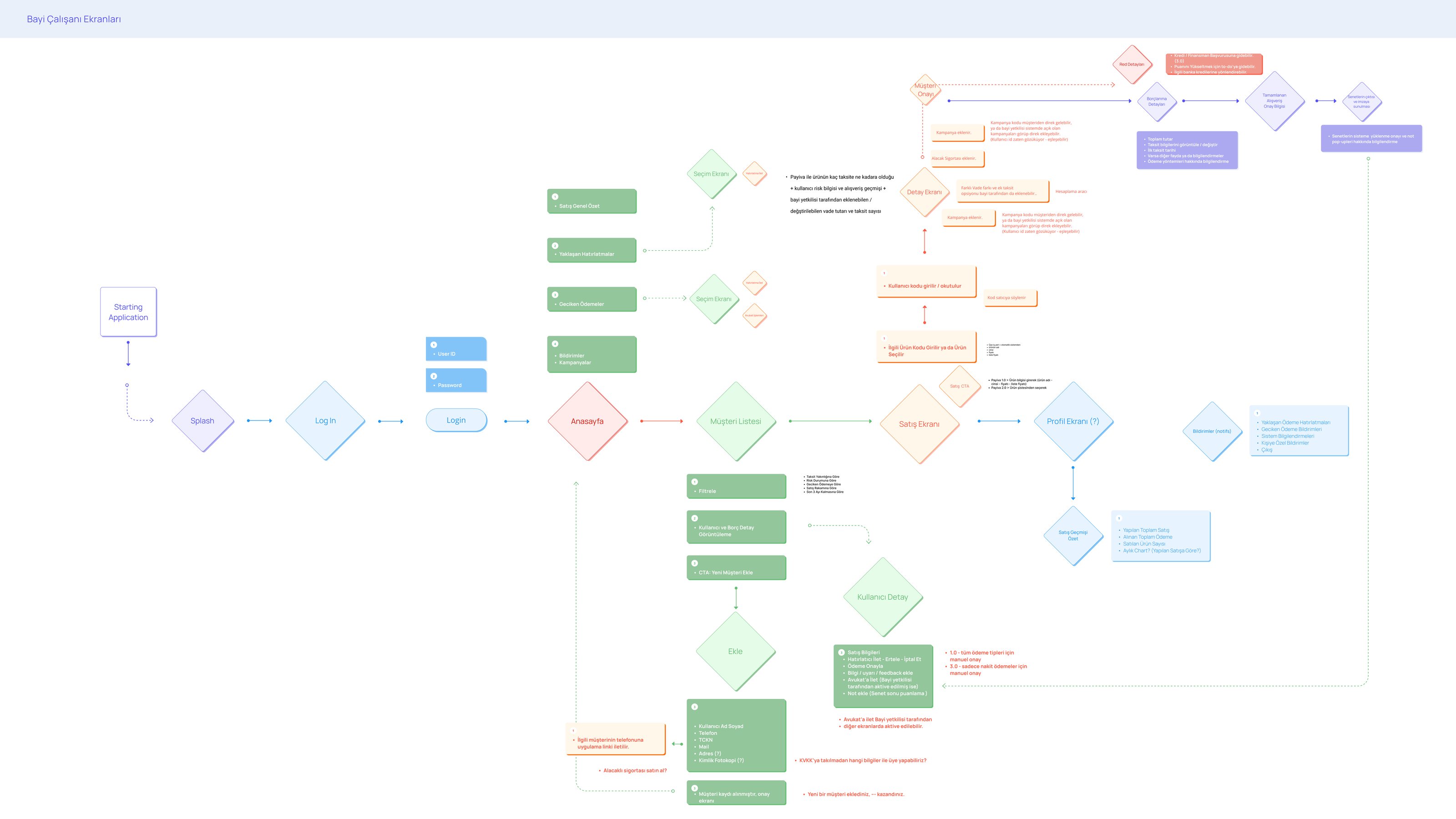
The dealer app was mapped end to end: the home screen with overdue payments and reminders, the customer list, looking up a customer by code, the sale and the customer's approval. Open questions stayed on the map, like which customer data could be collected under Turkey's data protection law.
Test with dealers who live on notes
Six dealers and a dealer manager, from innovators to traditional stores, worked through six tasks in a clickable prototype, from signing up a customer to editing a payment plan. They scored it 4.3 out of 5 on average, and the sessions gave us clear changes: the calculator now opens with the most the customer can pay each month, the score shows where its data comes from, and “New customer” moved where dealers actually looked for it.
04
The solution
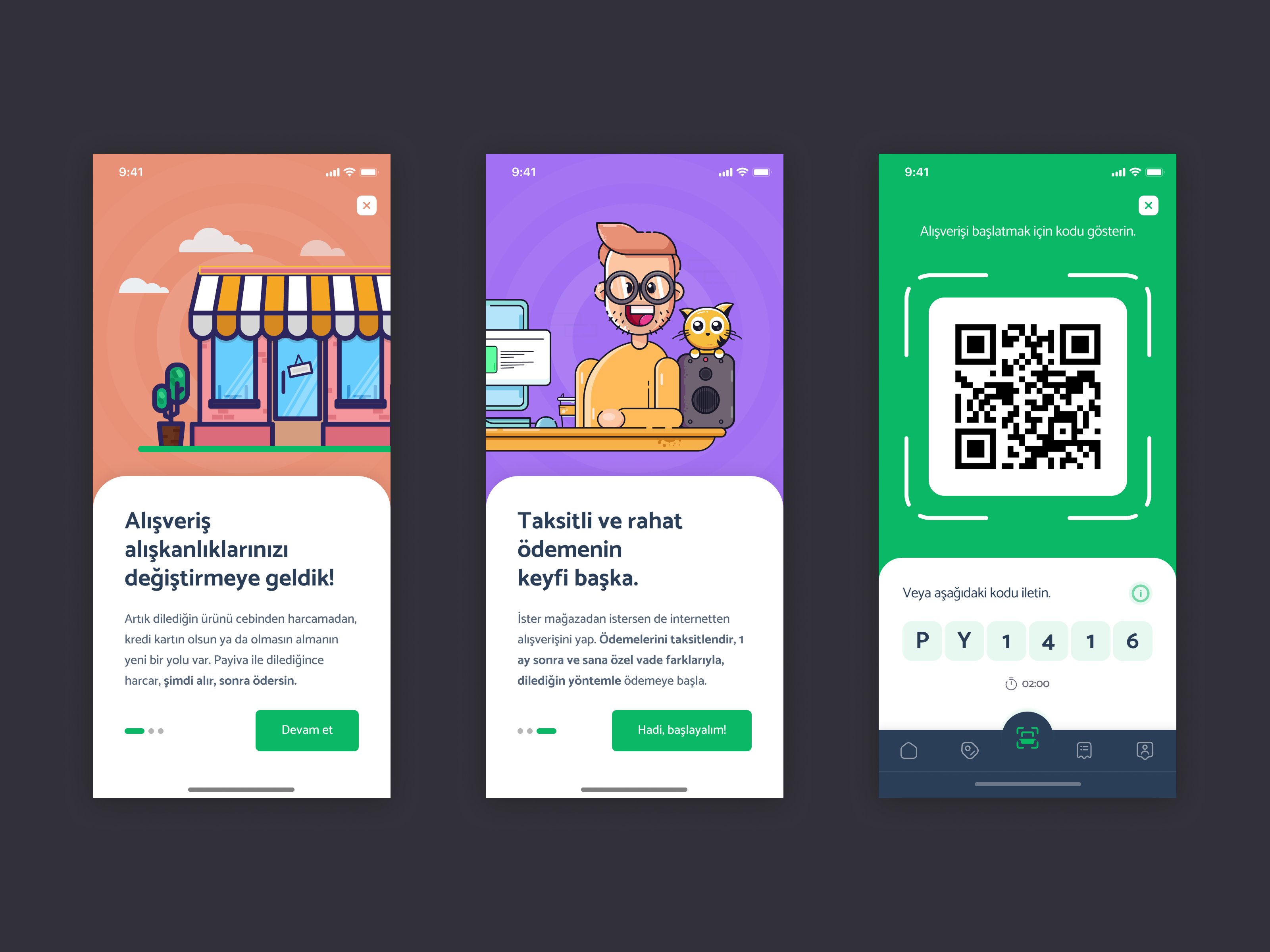
Payiva: a digital promissory note that lets customers buy now and pay later without a card, a loan or a guarantor, and gives dealers the tools to sell on notes with confidence.
05
Outcome
The phase closed with validated journeys, a dealer prototype tested with seven dealers and a prioritised list of changes, which carried the concept into high-fidelity designs for the customer and dealer apps.
A dealer in testing“Payment tracking and reminders are really well done. I employ someone just for tracking.”
06
Takeaways
Keep the trust, remove the chasing
The note works because dealer and customer know each other. Going digital had to keep that and take away the follow-up calls.
Design to the monthly budget
Customers think in what they can pay each month, so the tools had to start there too.
Test with the hardest users
“The whole neighbourhood knows us,” one traditional dealer said. Dealers like them showed where the product had to earn its place.
Car Leasing
Updated last, 2026.